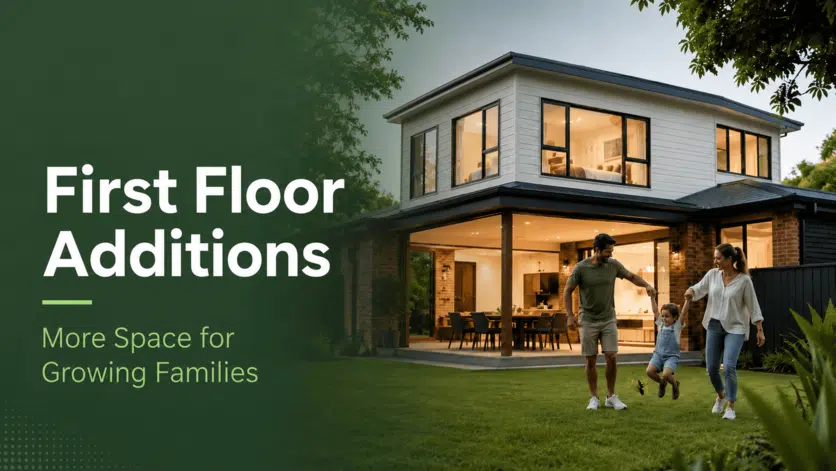
As families grow, homes can start to feel smaller. A once-comfortable three-bedroom house may suddenly feel crowded when children need their own rooms, parents need a home office, grandparents visit more often, or teenagers need a separate retreat.
For many Sydney families, the obvious question becomes: should we move, renovate or extend?
Moving may sound simple, but it can mean leaving the suburb you love, changing schools, paying stamp duty, managing agent fees, competing in a difficult property market and starting again in a new neighbourhood. Ground floor extensions can work well for some homes, but they may reduce backyard space, outdoor entertaining areas or a garden room.
That is why first-floor additions are such a practical option for growing families.
A first-floor addition, also called a second-storey addition or upstairs extension, allows you to build upward rather than outward. It can create extra bedrooms, bathrooms, living areas, a parent retreat, a children’s zone or a home office without sacrificing valuable land.
For families who love their location but need more space, a well-designed first-floor addition can transform the way the home works.
At Extend A Home, we help Sydney homeowners create smarter, more functional homes through first-floor additions, ground-floor extensions and complete home renovations. From design through to construction, the goal is to help families gain the space they need while improving comfort, flow and long-term liveability.

What Is a First Floor Addition?
A first-floor addition is a home extension that adds a new upper level to an existing house. In Australia, it is often also called a second-storey addition, upstairs extension or first-floor extension.
This type of renovation is commonly used to add:
- Extra bedrooms
- Additional bathrooms
- Parent retreat
- Children’s bedrooms
- Teenager retreat
- Study or home office
- Guest bedroom
- Upstairs living room
- Storage space
- Balcony or outdoor outlook
- Larger family layout
A first-floor addition can be built over part of the existing home or across a larger section of the roofline, depending on the structure, design goals, council requirements and budget.
The biggest advantage is that you can increase your internal living space without using more of your land. This is especially useful in established Sydney suburbs where block sizes may be limited and outdoor space is valuable.
For growing families, this means more room to live, work, sleep and relax while staying in the same home and community.
Why Growing Families Choose First Floor Additions
Families often consider first-floor additions when their current home no longer supports daily life.
You may be ready for a first-floor addition if:
- Children are outgrowing shared bedrooms
- You need an extra bathroom
- Parents need a private retreat
- You work from home and need a proper office
- Teenagers need a separate living space
- You want to keep your backyard
- You love your suburb and do not want to move
- The home has good bones but needs more space
- You want to improve long-term property value
- You need a layout that suits the next stage of family life
A first-floor addition can help solve the problem of space without the disruption of buying and selling property.
For many families, the emotional side also matters. Children may be settled in local schools. Family and friends may be nearby. The suburb may suit work, transport, sport, parks and lifestyle. Rather than leaving that behind, building upward allows the home to grow with the family.
First Floor Addition Ideas for Family Homes
A first-floor addition should not just add rooms. It should improve the way the whole home functions.
Here are some practical layout ideas for growing families.
1. Add Extra Bedrooms Upstairs
The most common reason families build a first-floor addition is to create more bedrooms. This may include two or three children’s bedrooms, a guest bedroom or a larger main bedroom.
Moving bedrooms upstairs can also free up ground floor space for larger living, dining or entertaining areas.
2. Create a Parent Retreat
A parent retreat can include a main bedroom, ensuite, walk-in wardrobe and sitting area. This gives parents a private space away from the busy family zones downstairs.
For long-term comfort, this can make a major difference.
3. Build a Children’s or Teenager Zone
As children grow, they often need more independence. An upstairs children’s zone may include bedrooms, a bathroom, a study nook and a small lounge.
This keeps the home organised and gives everyone more breathing room.
4. Add a Home Office
Working from home has become a normal part of family life. A first-floor addition can create a quiet office away from the kitchen, living room and everyday distractions.
This is especially useful for parents running a business or working hybrid roles.
5. Include an Extra Bathroom
One bathroom can quickly become a problem for a growing family. Adding an upstairs bathroom or ensuite can reduce morning stress and improve daily convenience.
6. Improve Views, Light and Airflow
Building upward may create opportunities for better natural light, district views, improved ventilation and a stronger connection with the surrounding area.
Well-placed windows, skylights and balcony spaces can make the new level feel open and comfortable.
First Floor Addition vs Moving House
Many families compare renovating with moving. Both options can work, but moving often comes with hidden costs and emotional disruption.
Moving House May Involve:
- Stamp duty
- Real estate agent fees
- Legal costs
- Removalist costs
- Possible school changes
- New commute times
- Competition in the property market
- Compromise on the suburb or home style
- Stress of selling and buying
- Renovations to the new property
A first-floor addition may allow your family to avoid many of these challenges while still gaining the extra space you need.
First Floor Additions May Offer:
- More space in your current home
- No need to change suburbs
- Better use of your existing land
- Potential property value improvement
- Custom design for your family
- Retention of backyard space
- Opportunity to modernise the whole home
- Less lifestyle disruption than relocating
If you already love your location, a first-floor addition can be a practical alternative to moving.
First Floor Addition vs Ground Floor Extension
A ground-floor extension expands the home outward, while a first-floor addition expands the home upward. The right choice depends on your block, budget, family needs and existing structure.
A Ground Floor Extension May Suit If:
- You have enough land
- You want a larger kitchen or living room
- You want a stronger indoor-outdoor flow
- You do not mind reducing some backyard space
- Your home layout works better with outward expansion
A First Floor Addition May Suit If:
- You want to keep your backyard
- Your block size is limited
- You need extra bedrooms
- You want a parent retreat or children’s zone
- You want to separate sleeping and living areas
- You want to maximise property potential
- You prefer to build up rather than out
In some homes, the best solution may be a combination of both: a ground-floor layout improvement with a new first-floor addition above.
This is where professional design advice becomes important.
What to Consider Before Building Up
A first-floor addition is a major renovation, so careful planning is essential.
Structural Suitability
Not every home can immediately support a new upper level. A builder or engineer needs to assess the existing foundations, walls, roof structure and load-bearing capacity.
In some cases, structural strengthening may be required.
Council and Planning Requirements
First floor additions may need planning approval, depending on the property, local council rules, zoning, height limits, setbacks, heritage controls and neighbourhood character requirements.
A good renovation team can help guide you through the approval process.
Design Integration
The new level should look like it belongs to the original home. Poorly designed additions can feel disconnected or visually heavy.
Good design considers rooflines, materials, proportions, window placement and street appeal.
Family Lifestyle During Construction
Some families may be able to stay in the home during part of the renovation, while others may need temporary accommodation. This depends on the scope of work, safety, services and construction stages.
Budget and Contingency
A first-floor addition involves design, approvals, engineering, demolition, construction, finishes, plumbing, electrical, roofing, insulation and internal upgrades.
A realistic budget should include a contingency allowance for unexpected issues.
Long-Term Needs
Think beyond what your family needs today. Consider teenagers, work-from-home needs, visiting relatives, storage, accessibility and future resale appeal.
A first-floor addition should support the next 10 to 20 years of family living.
Design Features That Make a First Floor Addition Work
The best first-floor additions feel natural, functional and comfortable. They do not simply add rooms; they improve the whole home.
Smart Staircase Placement
The staircase affects the flow of the entire home. It should be positioned where it feels natural and does not waste valuable ground-floor space.
Natural Light
Windows, skylights and open stair voids can help bring light into both the new upper floor and the existing lower level.
Good Insulation
A first-floor addition should be designed for year-round comfort. Insulation, ventilation and window selection all matter.
Storage
Growing families need storage. Built-in wardrobes, linen cupboards, roof storage and under-stair storage can make the home more practical.
Balanced Layout
Bedrooms, bathrooms and living areas should be arranged to reduce noise and improve privacy.
Consistent Exterior Style
The addition should complement the original home. Matching or thoughtfully contrasting materials can help create a seamless result.
Future Flexibility
A room used as a nursery today may become a study later. A children’s lounge may become a guest space. Flexible design gives the home long-term value.
How the First Floor Addition Process Works
While every project is different, the process usually includes the following stages.
Step 1: Initial Consultation
The process begins with understanding your goals, family needs, budget and property potential.
Step 2: Site Assessment
The home is reviewed to understand structure, access, site conditions, planning controls and design possibilities.
Step 3: Concept Design
A design concept is prepared to show how the first floor addition could work, including layout, room placement and overall flow.
Step 4: Approvals and Documentation
Plans, engineering and approval documents are prepared. Depending on the project, this may involve council approval or complying with development approval.
Step 5: Construction Planning
The construction program, materials, access, timelines and site management are organised.
Step 6: Building Work
The existing roof may be removed or modified, structural work completed, the new level constructed, and internal services connected.
Step 7: Finishes and Handover
Final finishes, painting, flooring, fixtures and quality checks are completed before the family moves into the new space.
A clear process helps reduce stress and keeps the project moving smoothly.
How Extend A Home Can Help
Choosing the right builder matters. A first-floor addition is not a small cosmetic renovation. It requires experience in design, approvals, structural work, construction sequencing and family-focused layouts.
Extend A Home specialises in first-floor additions, ground-floor extensions and complete home renovations in Sydney. The team provides design-to-construction support to help homeowners create more functional, comfortable and valuable homes.
Extend A Home can help with:
- First-floor addition design
- Second-storey additions
- Home extensions
- Complete home renovations
- Layout planning for growing families
- Design and construction coordination
- Council and approval guidance
- Structural and building considerations
- Modernising older Sydney homes
- Creating more bedrooms, bathrooms and living space
For growing families, the goal is simple: create more room without giving up the home, street and community you already love.
Signs Your Family May Be Ready for a First Floor Addition
You may be ready to explore a first-floor addition if:
- Your children are sharing rooms, but need more space
- You need another bathroom
- You are working from the dining table or a spare corner
- Your home feels crowded during mornings and evenings
- You want a parent retreat
- You want to stay in your current suburb
- You are running out of storage
- You want to keep your backyard
- Moving house feels too expensive or disruptive
- Your home has potential but needs a smarter layout
If several of these sound familiar, it may be time to speak with an experienced first-floor addition builder.
FAQ: First Floor Additions for Growing Families
What is a first-floor addition?
A first-floor addition is an upstairs extension that adds a new level to an existing home. It can create extra bedrooms, bathrooms, living areas, a parent retreat, a children’s zone or a home office.
Is a first-floor addition good for growing families?
Yes. A first-floor addition can be ideal for growing families because it creates more living space without reducing backyard area or requiring the family to move to the suburbs.
Is it better to build up or extend out?
It depends on your block, home structure and goals. Building up is often better when you want to keep outdoor space, while extending out may suit larger blocks or open-plan living upgrades.
Do first-floor additions add value?
A well-designed first-floor addition may improve property value by adding bedrooms, bathrooms and functional living space. The result depends on design quality, location, build standard and buyer demand.
Can I live at home during a first floor addition?
Sometimes, but it depends on the project scope, safety, services and construction stages. Your builder can advise whether staying in the home is practical or whether temporary accommodation is recommended.
How can Extend A Home help with a first-floor addition?
Extend A Home can help with design, planning, approvals and construction of first-floor additions in Sydney, creating tailored spaces for growing families who need more room without moving.
Final Thoughts
A growing family does not always need a new address. Sometimes, the smarter solution is to make better use of the home you already have.
A first-floor addition can create extra bedrooms, bathrooms, living space, a home office or a parent retreat while helping you stay close to schools, neighbours, transport and the community you love.
The key is thoughtful design and experienced construction. A successful first-floor addition should feel natural, improve daily life and support your family’s future needs.
At Extend A Home, we help Sydney homeowners transform their homes with first-floor additions, ground-floor extensions and complete renovations. If your family needs more space but you do not want to move, a first-floor addition may be the next step.
Contact Extend A Home today to discuss your first-floor addition and explore how your home can grow with your family.
Disclaimer: This guide provides general information only and does not constitute building, design, legal or financial advice. First floor addition suitability, approvals, costs and timelines vary depending on property condition, council requirements, structural factors and project scope. Always seek advice from qualified building, design and approval professionals before starting a home extension project.
Request a Call Back
Read More
What Our Clients Say


Project: When the house was renovated by Extend a Home, I felt as if we’d doubled our house size.I just felt this was realy the home the would set us up for the next 10 years. The way they designed and built into it, it felt a lot larger, like we got a lot more bang for the buck than we expected we would
Trent & Emma


Project: I feel like I’ve died and gone to heaven in this house.I walk in, and it’s a sense of peace ’cause the openness and the light. It’s like people rent a place like this for their summer holidays and I feel like I’m here.
Deidre


Project:
I felt like my dream had come true. This is a house that we can leave our sons with confidence so it was an investment as much as it was a lifestyle change. With renovating and extending,we’ve got more storage, especially the study and the library. As a handyman myself, I was looking for attention to detail.in the work they did, the quality of the work, so nothing is too hard and it sort of just ran smoothly
Steve & Jane

Project:
When the house was fully renovated, I felt like it was somewhere that I wanted to stay for the rest of my life it really is a friendly home to be proud of, My experience working with Extend a Home was far more pleasant than I ever thought it could be
Michele & Glen

Project: When the house was newly renovated by Extend a Home, we fet so happy, we finally got the property that we’d actually envisaged in our minds and that we always wanted. Its delivered everything that we expected and more
Richard McPartlin


Project: When Extend A Home extended our home I felt that everything was under control while they are managing the project they know what they are doing and I feel that I’m safe in their hands.We needed the space for our relatives that come over and would like to live in this place a bit longer